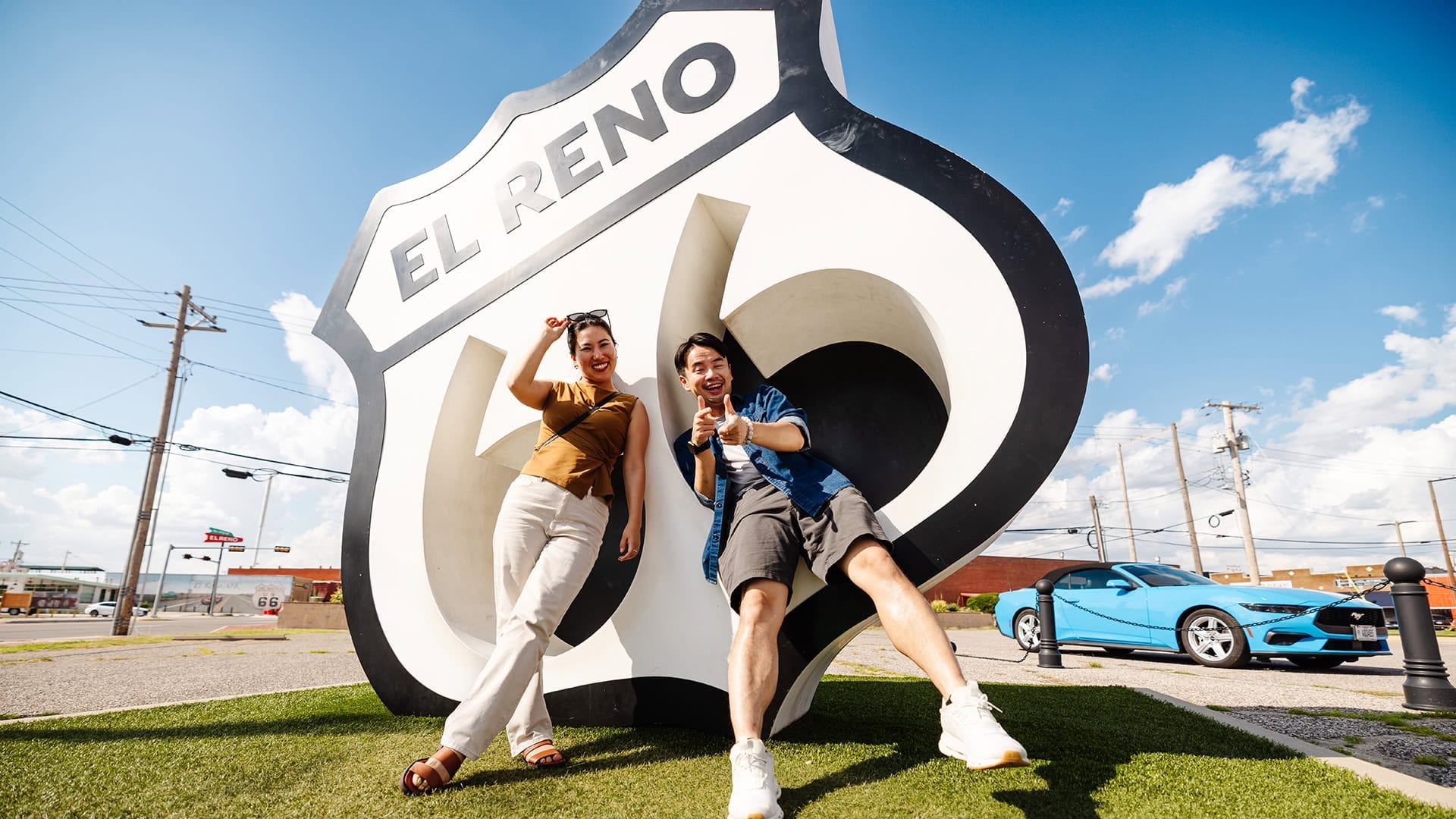
Cruise Route 66 in the American Southwest with plenty of unexpected attractions and roadside stops along the way.
Route 66 opened in 1926, linking Chicago, Illinois, to Santa Monica, California, as the country’s first fully paved coast-to-coast highway. It cut across eight states, giving travelers an easier way to drive across America. Nicknamed the “Mother Road” after John Steinbeck’s “The Grapes of Wrath” and later celebrated in song and on the silver screen, Route 66 has stood as a symbol of the freedom of the open road for a century. This drive follows Route 66 west, from Tulsa, Oklahoma, to Albuquerque, New Mexico, where roadside icons, nostalgic diners and desert towns built Route 66’s legend.
Known as the Capital of Route 66, Tulsa welcomes travelers with landmarks spanning the highway’s history – in the state that boasts more kilometers of Route 66 than any other.
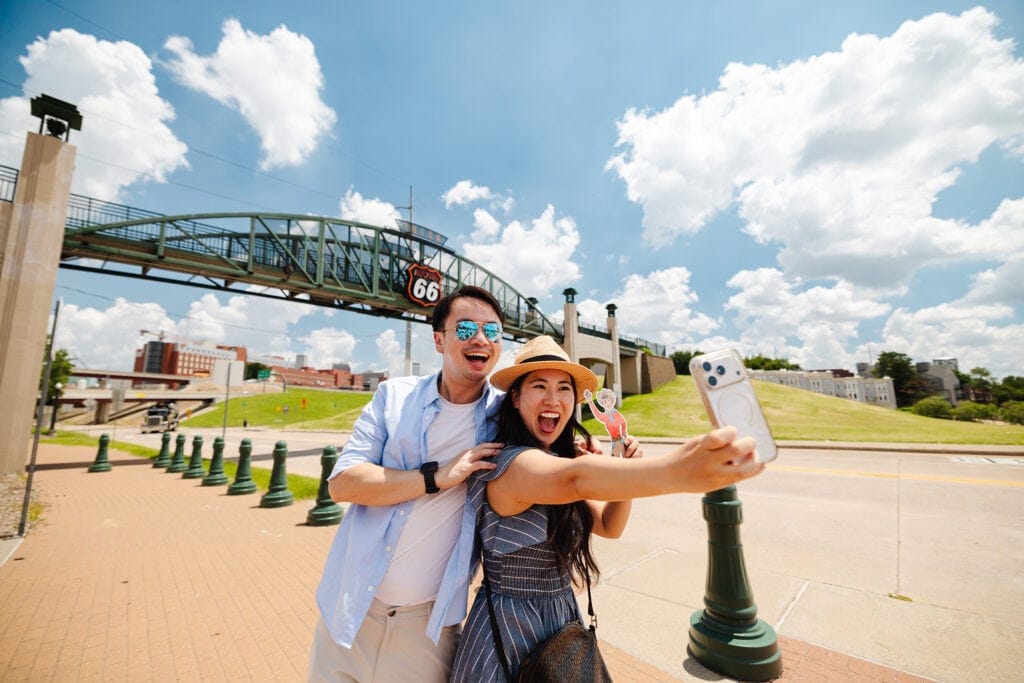
At the historic crossing of Route 66 and the Arkansas River Bridge, Cyrus Avery Centennial Plaza celebrates the man known as the “Father of Route 66.” Its centerpiece, the East Meets West sculpture, captures a 1920s family in a modern automobile crossing paths with an oil worker and his horse-drawn wagon, framed by murals and riverside walkways built for lingering.
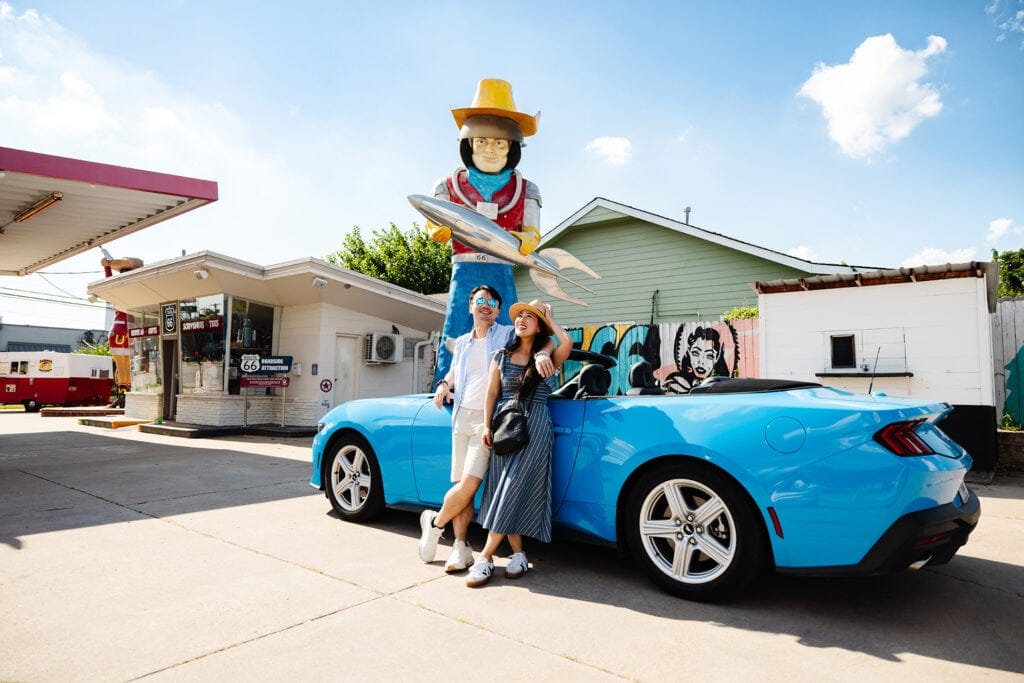
True to its name, Buck Atom’s Cosmic Curios is watched over by a massive spaceman statue rising from the grounds of the former gas station — a new take on the fiberglass “Muffler Men” giants that have towered over roadside stops along Route 66 since the 1960s. Inside, shelves brim with retro toys, postcards and souvenirs. Nearby, browse Buck’s Vintage for curated secondhand finds.
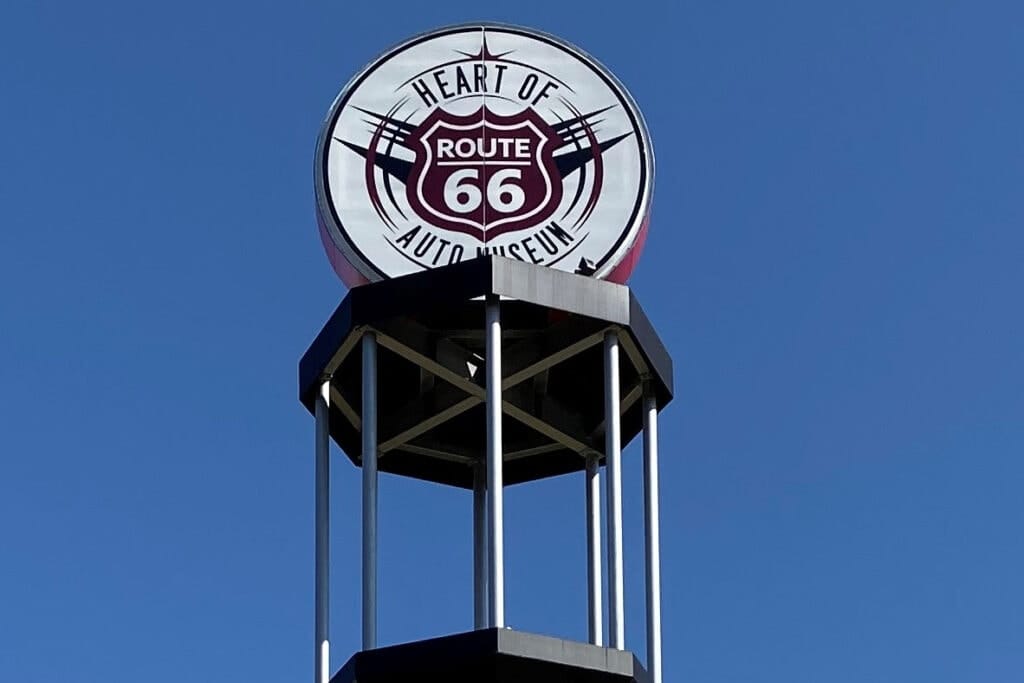
For a look back at the highway’s golden age, visit this rotating collection of vintage automobiles, motorcycles and memorabilia. The building’s unique steel facade is photo-worthy, and the gift shop is stocked with just about every Route 66 keepsake you could want.
Just west of Oklahoma City, visit El Reno. Here, you’ll find vintage storefronts and quiet downtown streets. The town’s claim to fame, a famous fried onion burger, is a must-try for foodies.
Departing from downtown El Reno, the Heritage Express Trolley carries visitors on a narrated tour past century-old storefronts and landmarks tied to the town’s railroad and Route 66 heritage. Hop aboard for a relaxed sightseeing trip.
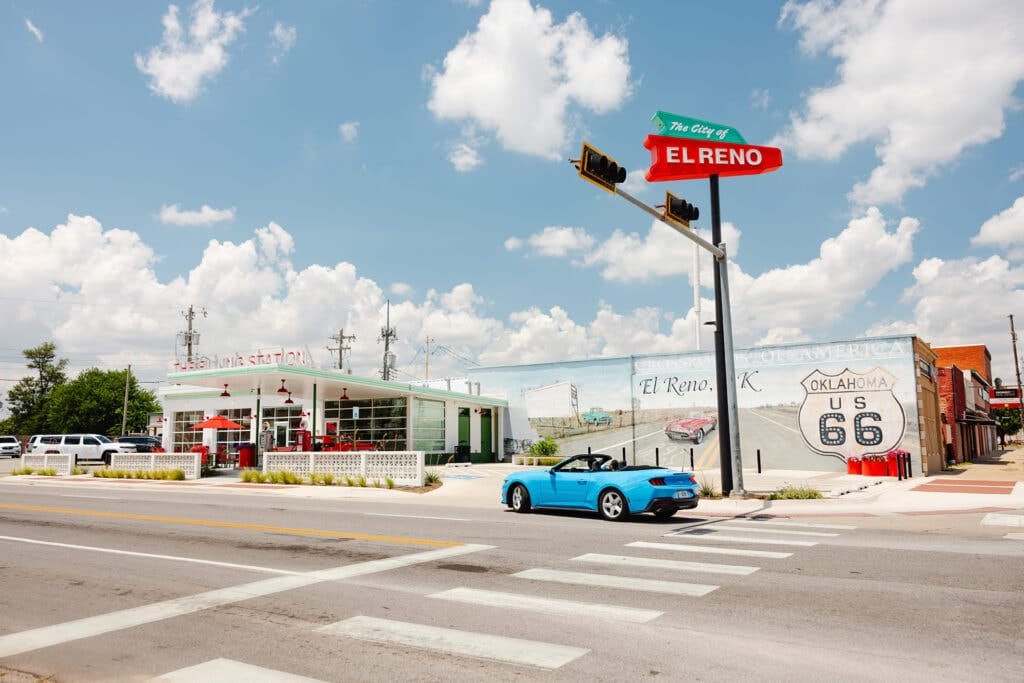
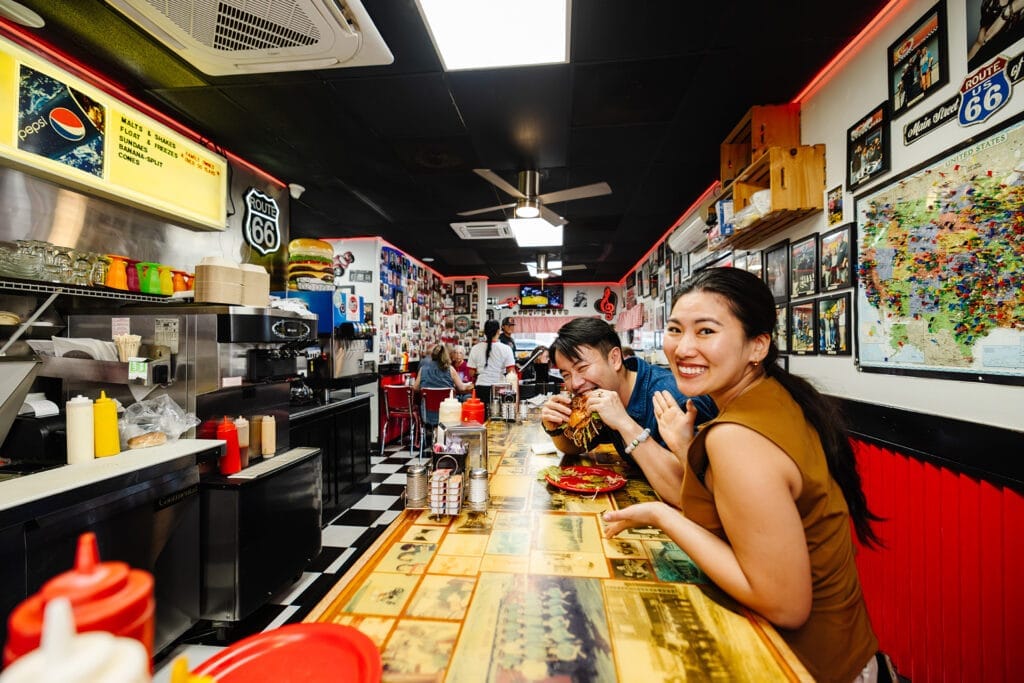
Marty Hall opened Sid’s Diner in 1989 in El Reno and revived a Depression-era trick invented in the town to create their signature fried onion burger. The onions are sliced ultra-thin and smashed into a beef patty as it sears. The effect is a sweet, crispy, caramelized crust you’ll be thinking about long after your pit stop. The restaurant was named after Marty’s late father, and is run today by his son, Adam. Pair your burger with a creamy hand-dipped milkshake for the ultimate diner experience.
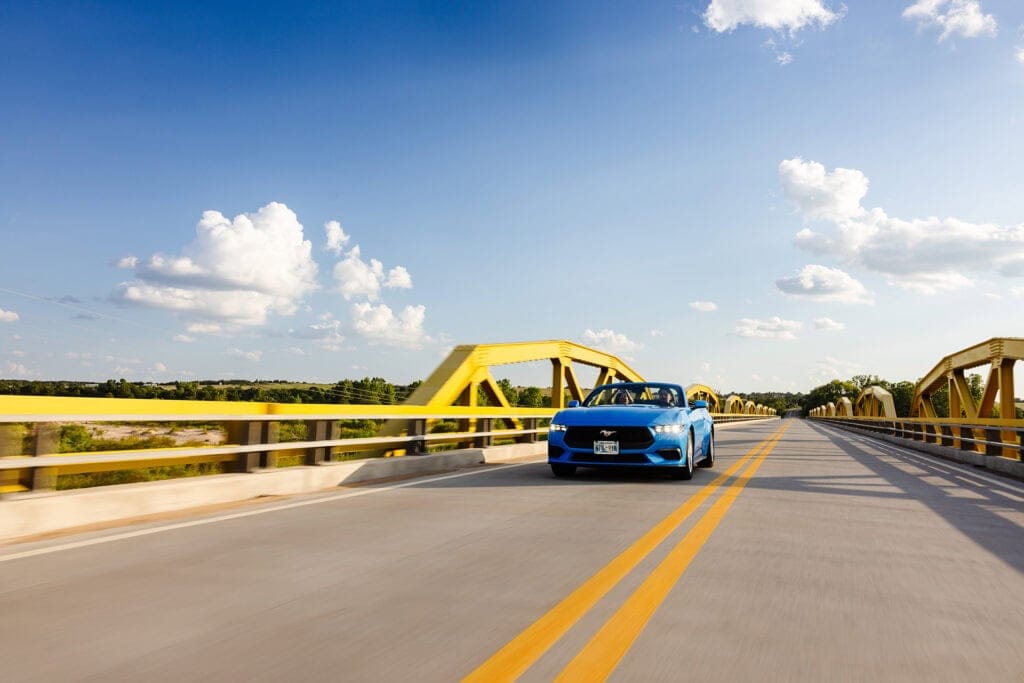
Just west of town, cruise across the William H. Murray Bridge, nicknamed the “Pony Bridge,” a 1.2-kilometer span over the South Canadian River and one of the longest bridges on the Route 66 corridor. Built in 1933 and featured in the film “The Grapes of Wrath,” its 38 restored camelback trusses lead to a scenic turnout where you can see the Compass monument, a giant drafting-tool sculpture.
The rolling prairies of Oklahoma give way to New Mexico’s high desert, where Route 66 splits into two historic alignments through Albuquerque. Adobe architecture, glowing neon and signature quirk come together in a city shaped by Indigenous, Hispanic and Western traditions.
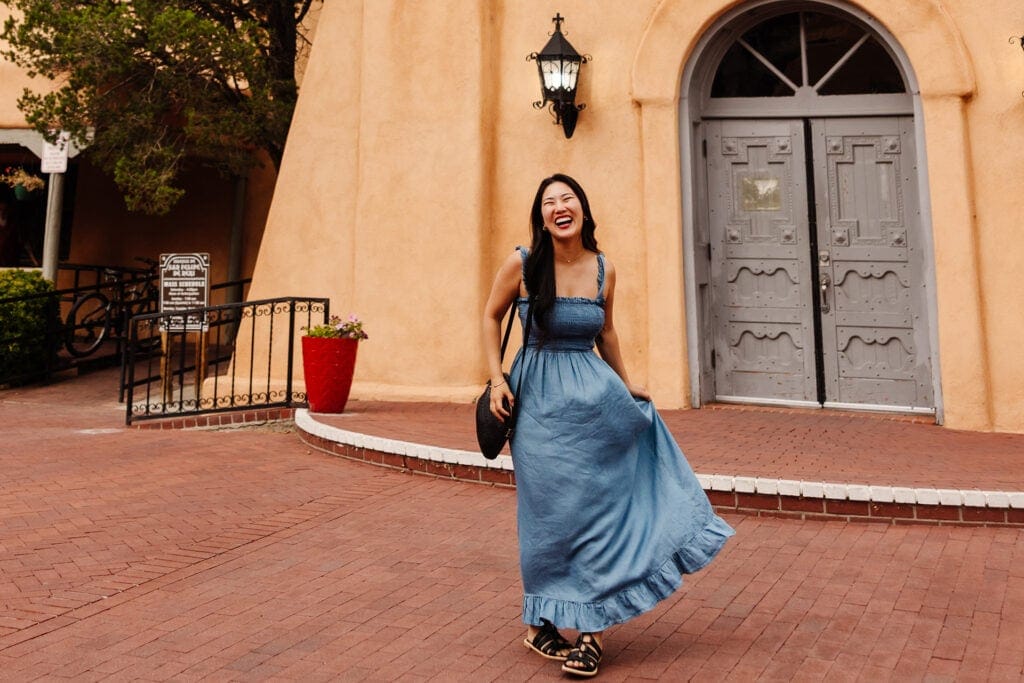
Before Route 66, Albuquerque’s Old Town was already centuries old, dating to the city’s founding by Spanish settlers in 1706. Today, galleries, jewelry shops and restaurants line the paths around the historic San Felipe de Neri Church.
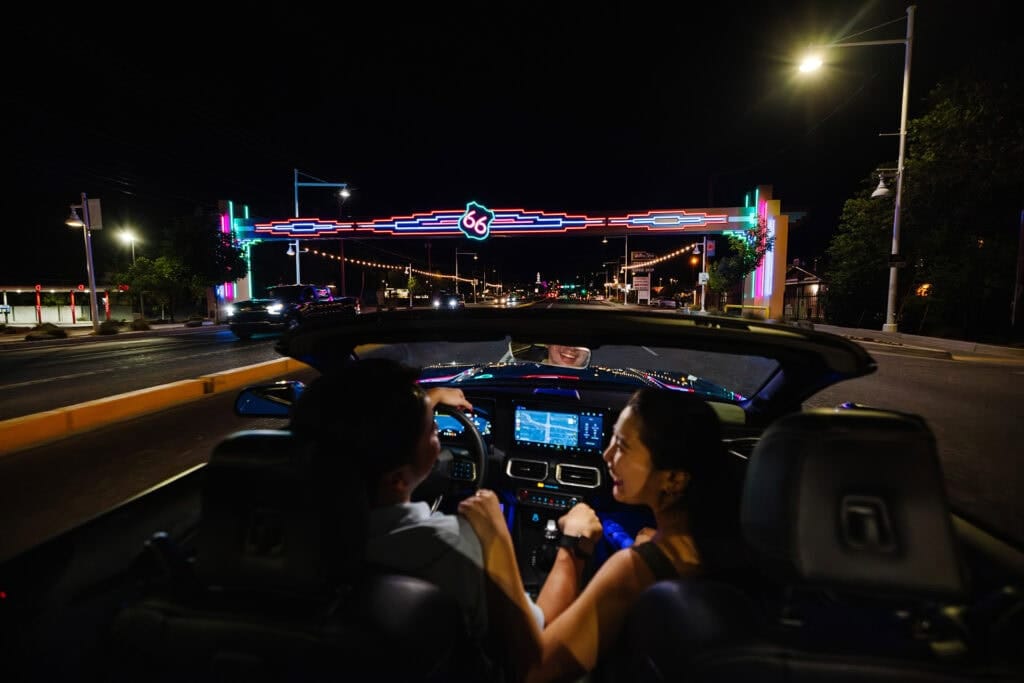
Along Central Avenue, Nob Hill’s neon-lit strip still captures Route 66’s golden age. Independent boutiques, bookstores and restaurants fill buildings dating back to the 1940s, many still with their original signage.
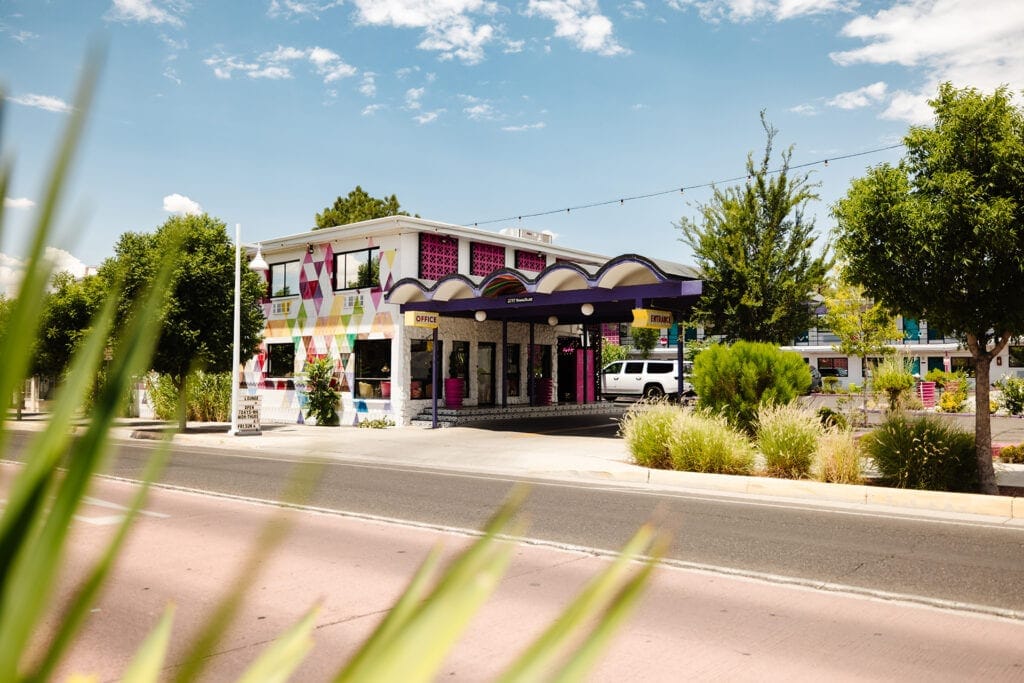
Hotel Zazz occupies a reimagined 1960s Travelodge that later operated for decades as the family-run University Lodge, including under owner Sharmin Dharas’s parents starting in 1996. When Dharas, an Albuquerque native, transformed the property into Hotel Zazz in 2022, she kept its original breeze-block walls and barrel-arched porte cochere while enlisting nearly 50 artists from around the country to bring bold murals, vibrant colors and an outdoor pool to life. Its central Nob Hill location makes it easy to wander the neighborhood’s shops, diners and neon signs.
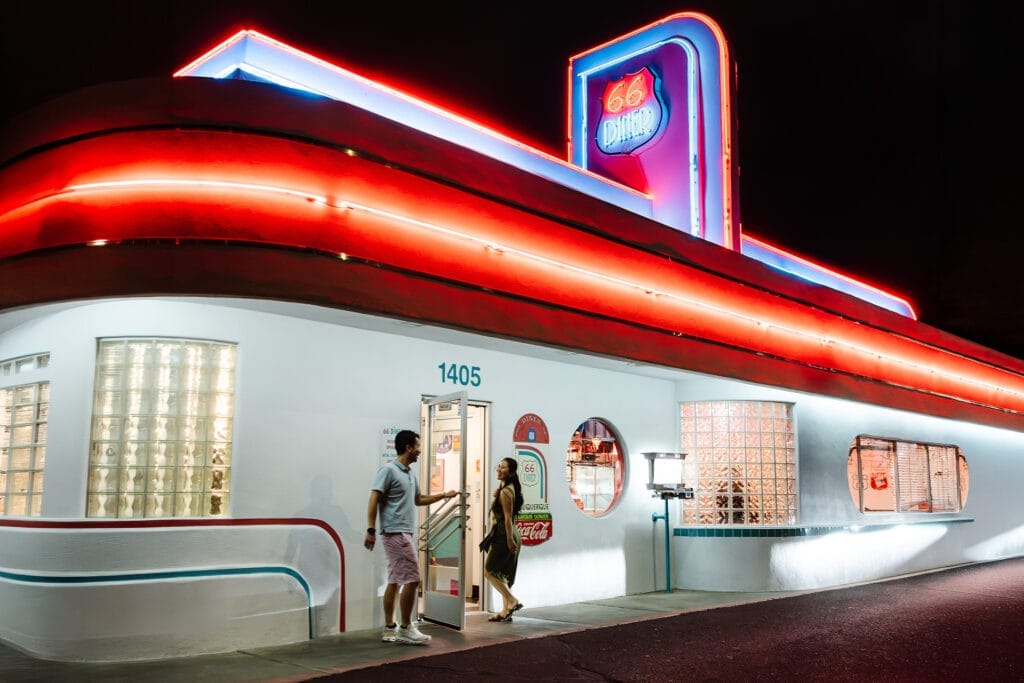
Housed in a former gas station, the Route 66 Diner serves up classic comfort food under the glow of vintage neon signs. Tasty green-chile cheeseburgers, hand-spun milkshakes and a vintage jukebox soundtrack do the rest, treating diners to the nostalgic Americana that made Route 66 famous.
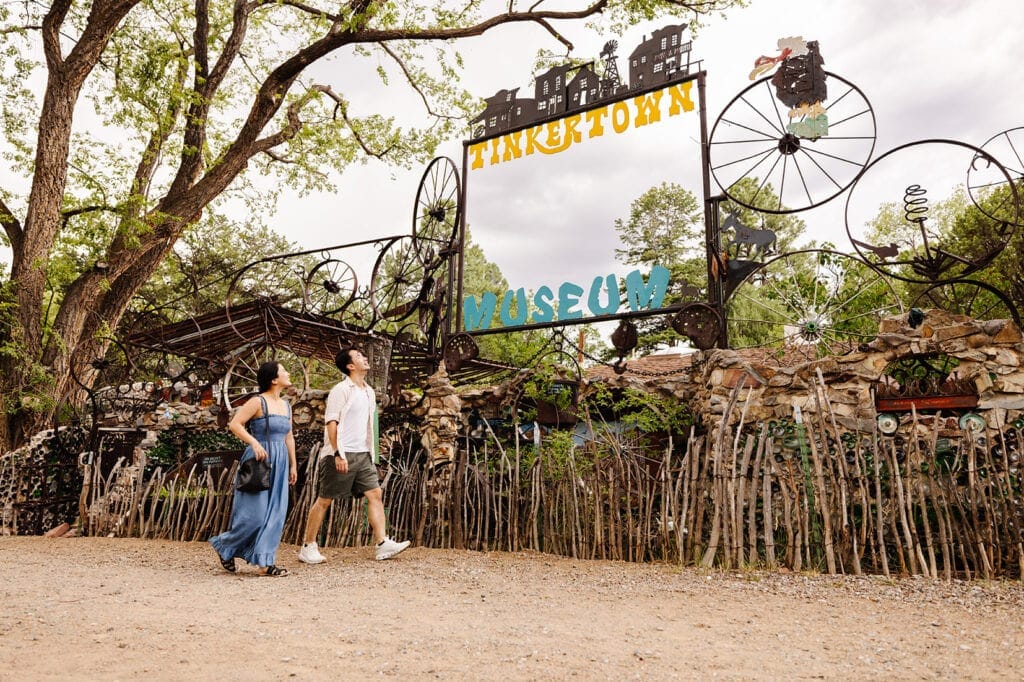
Up a winding mountain road just a 30-minute drive from town, the Tinkertown Museum is one of the trip’s most delightfully unexpected stops. For more than 40 years, folk artist Ross Ward crafted a wonderland of hand-carved miniature figures, animated dioramas and eccentric creations. Outside, walls embedded with thousands of glass bottles catch the light, turning the museum into a whimsical world all its own.
Round out the drive west with these gateway and connector cities, each offering their own take on the Route 66 experience.
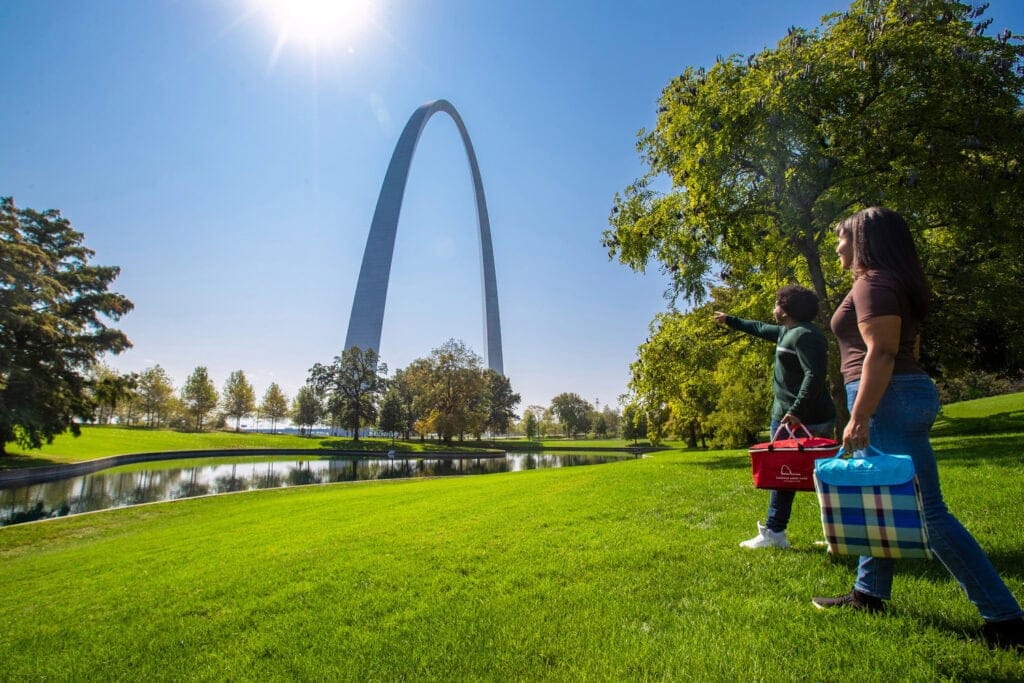
Fly into St. Louis Lambert International Airport, a major gateway that makes St. Louis a practical place to begin this stretch of Route 66. Start at the iconic Gateway Arch, the 192-meter stainless steel monument Eero Saarinen designed in 1965. Ride the tram to the top for 360-degree views over the Mississippi River. The arch commemorates the city’s historic role as the last stop for 19th-century pioneers heading west. Just north of downtown, the Chain of Rocks Bridge carries pedestrians across the Mississippi on one of the most recognizable surviving stretches of the original Route 66, marked by a distinctive bend at its center. Take a stroll through Maplewood, a walkable neighborhood brimming with shops, breweries and cafes just west of downtown. Don’t leave without a stop at Ted Drewes for a scoop of their famously thick frozen custard.
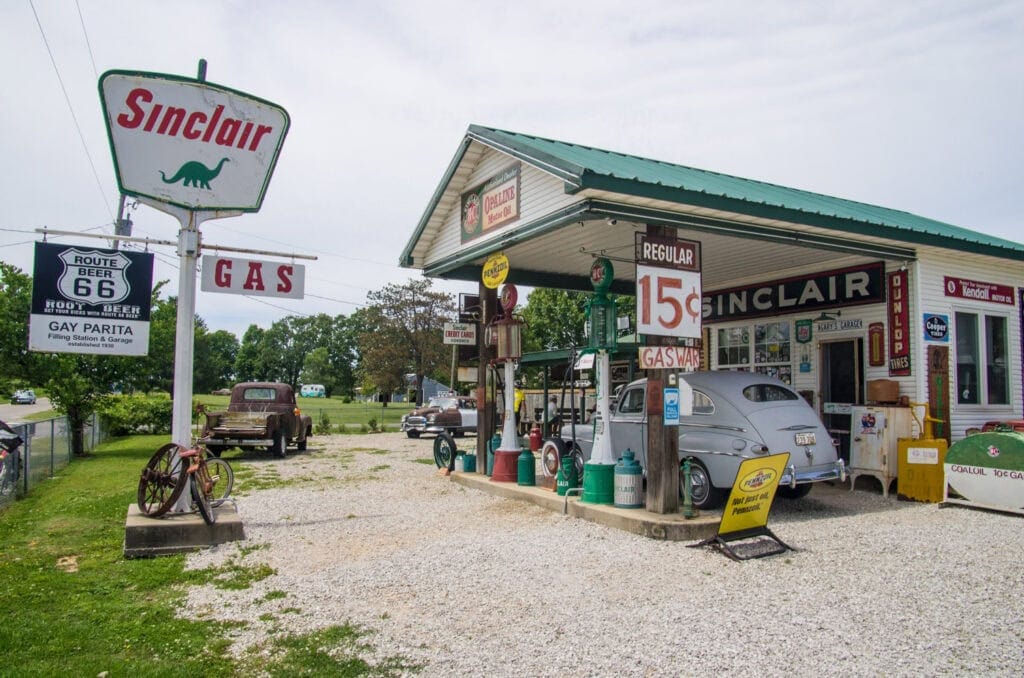
Long considered the birthplace of Route 66, Springfield, where the highway was named in 1926, is a fitting stop on the drive between St. Louis and Tulsa. The History Museum on the Square traces that origin story alongside the city’s broader heritage, while the Route 66 Car Museum showcases a rotating lineup of vintage automobiles. Outdoors, the Route 66 Centennial Sculpture Series lines the route with impressive public art displays. Just west of town, Gary’s Gay Parita recreates a vintage filling station, complete with antique pumps and a collection of vintage signs. Don’t forget to take a picture with the iconic green Sinclair Dino statue.
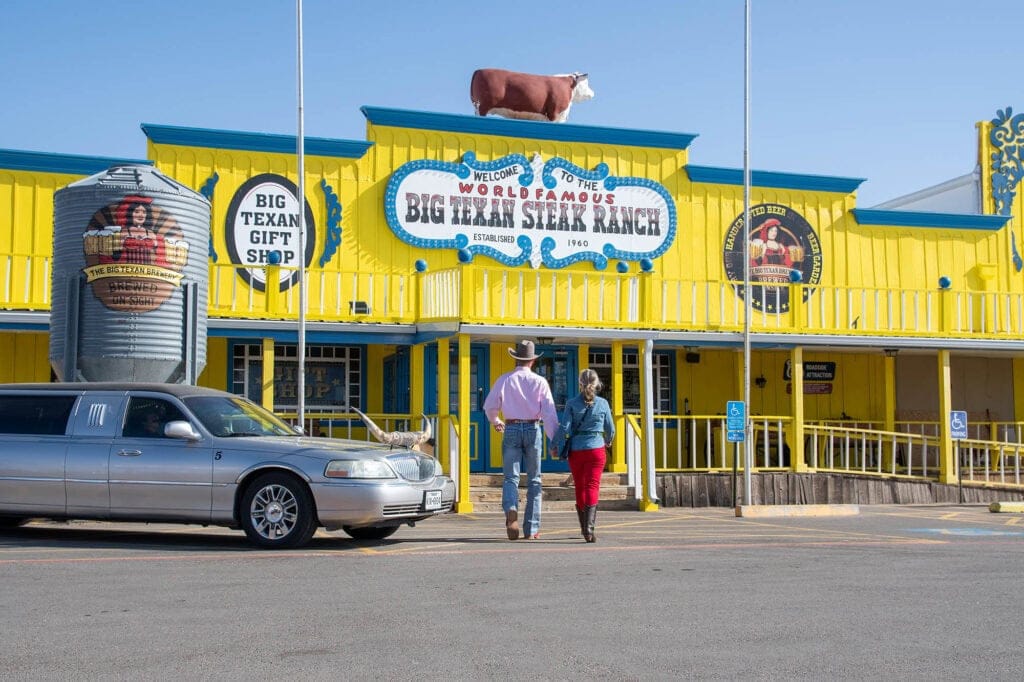
Halfway between El Reno and Albuquerque, Amarillo breaks up the drive from Oklahoma to New Mexico with some of Route 66’s most photographed stops. Shortly after you cross into Texas, take a rest at the restored Tower Station and U-Drop Inn Cafe, which drips with Art Deco flair. Arrive in Amarillo hungry: The Big Texan Steak Ranch & Brewery challenges you to finish its indulgent steak dinner. A few kilometers east, Slug Bug Ranch offers a vibrant graffiti-covered echo of the city’s best-known landmark, Cadillac Ranch, where 10 vintage Cadillacs stand nose-down in an open field, coated in decades of layered spray paint (bring a can to add your own mark). As you head west, grab a slice of “ugly crust” pie at the Midpoint Cafe — you’re now at the exact halfway point of Route 66. Next stop: New Mexico, where you’ll end the trip in Albuquerque. After you explore the city, you can catch a flight home from Albuquerque International Sunport.
MORE TRIP IDEAS
Arts & Culture
Road Trips
See Louisiana, Alabama and Mississippi by Train: Amtrak’s Mardi Gras Service
All aboard for adventure! Discover a scenic and convenient way to visit some of the South’s most exciting cities.
Read Article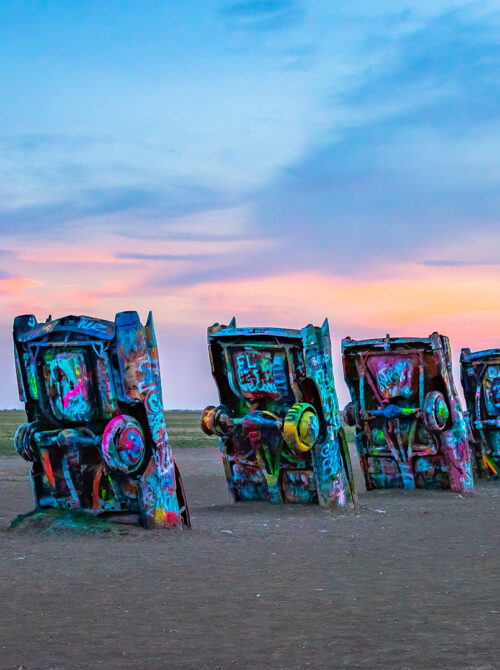
Road Trips
Route 66
Southwest Route 66: Neon Signs and Skylines in Oklahoma, Texas and New Mexico
Iconic experiences and unexpected thrills await on the stretch of Route 66 through the USA’s Southwest.
Read Article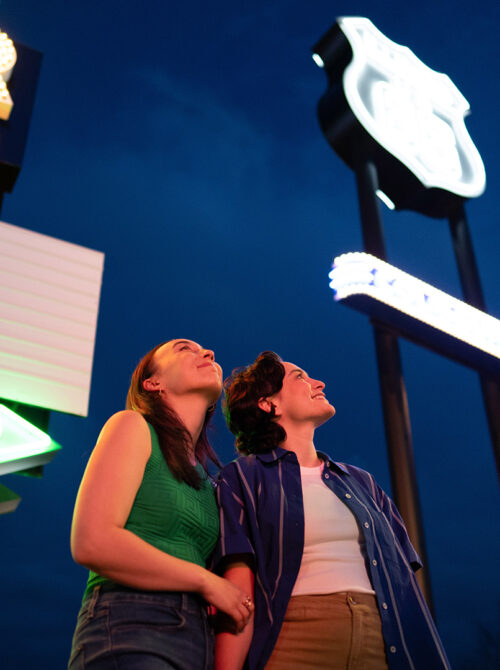
Family
History & Heritage
Road Trips
Route 66
Nostalgia And New Experiences On And Around Route 66 In Illinois
Route 66, often referred to as the Mother Road, holds a special place in U.S. history and culture.
Read Article
Road Trips
New England Road Trip: World-Class Culture and Fresh-Air Adventures
Discover an authentic slice of New England with an unforgettable drive through Massachusetts, Maine, New Hampshire and Vermont.
Read Article
Road Trips
Route 66
Explore the Heart of the USA on Route 66
Enjoy the journey from state-to-state on this iconic American road trip.
Read Article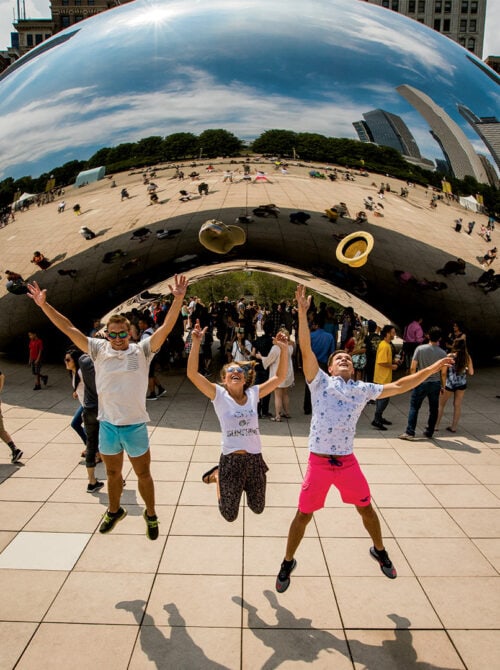
American Originals
Arts & Culture
Road Trips
10 Iconic Outdoor Sculptures & Monuments to See on a USA Road Trip
Discover massive monuments and incredible sculptures you’ll want to add to your road trip itinerary.
Read Article